Technologies
- Home
- Technologies
Processes and automation
Italtech machines support a range of molding processes and integrate with automation and monitoring systems for new and existing presses.
- Molding technologies for multi-material, high-precision and high-volume production
- Management technologies for automation, monitoring and process control
- Compatible with new and existing machines
Management section
Magnetic and hydraulic quick mold clamping systems.
Magnetic systems
- No modification to the mold required any shape can be clamped
- Clamping force equal to or higher than machine opening force
- Ensures safe clamping
Hydraulic systems
- Applied for high mold standardisation
- Used on automated mold change lines
Integrated island for automated mold change. Strategic planning of mold changing sequences with mold stock monitoring.
- Project development and supply of automated manufacturing cells
- Mold handling with preheating, post-cooling and changing
- Stock monitoring and sequence planning
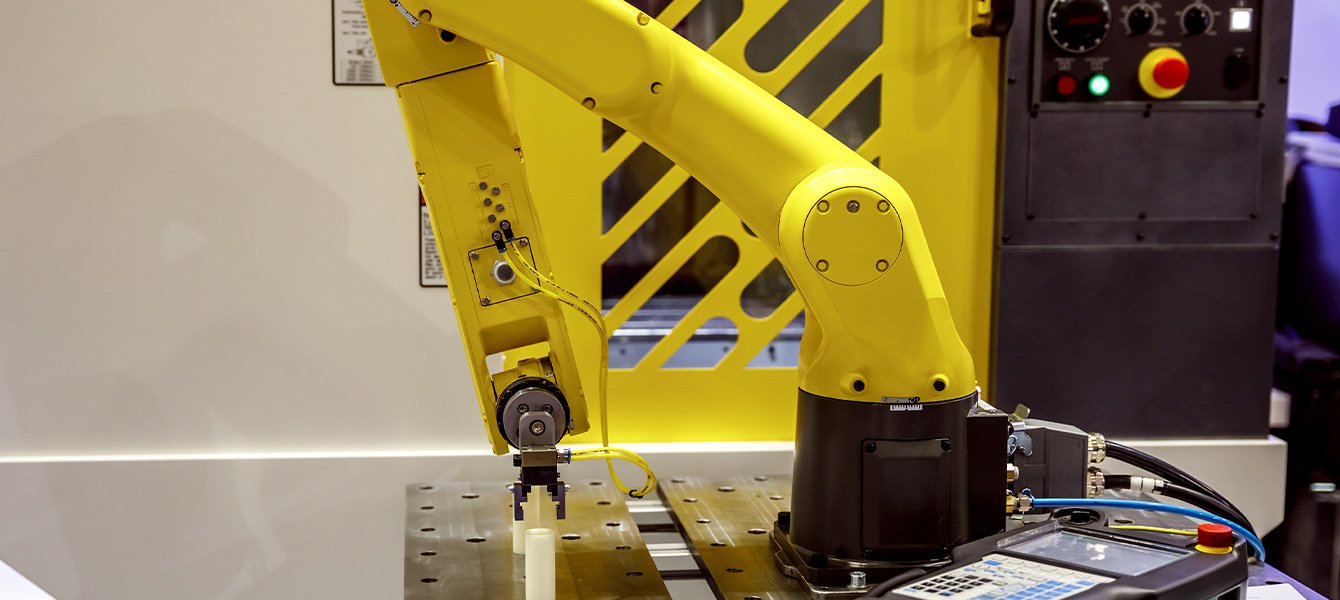
Six-axis and Cartesian robots integrated with the molding machine. Eight applications:
- High-speed de molding
- Bi-material injection molding
- Mold decoration and labelling
- Insert loading
- Controlled environment injection molding
- Bonding and sealing
- Quality control
- Packaging
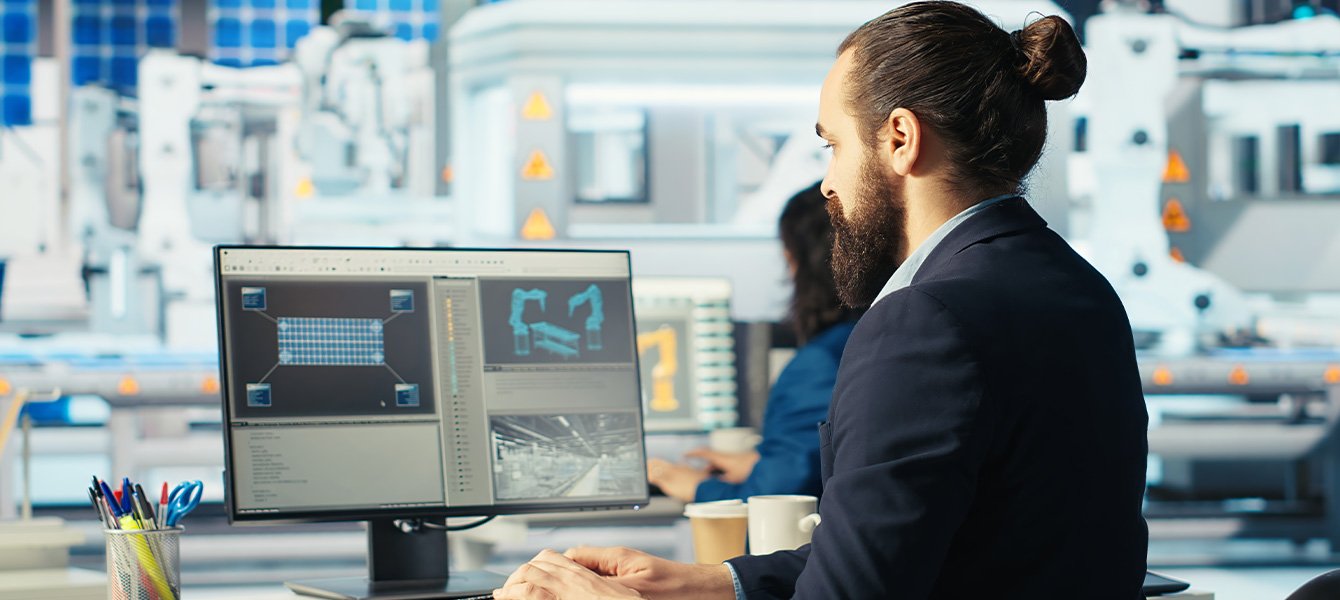
Central monitoring and management of molding lines.
- Stock management and customer order planning
- Medium-term planning and molding department management
- Mold change, colour and material sequence optimisation
- Real-time monitoring of presses with graphical and numerical indicators per machine
Simulation data supports investment decisions and production costing.
- Simulation results become a company technical asset
- Increases competitiveness, reduces investment cost and risk
- Benefits extend to environmental protection and occupational safety
- Determines the final product cost with specific molding systems and technologies
- Economic return evaluation for new investments and technologies
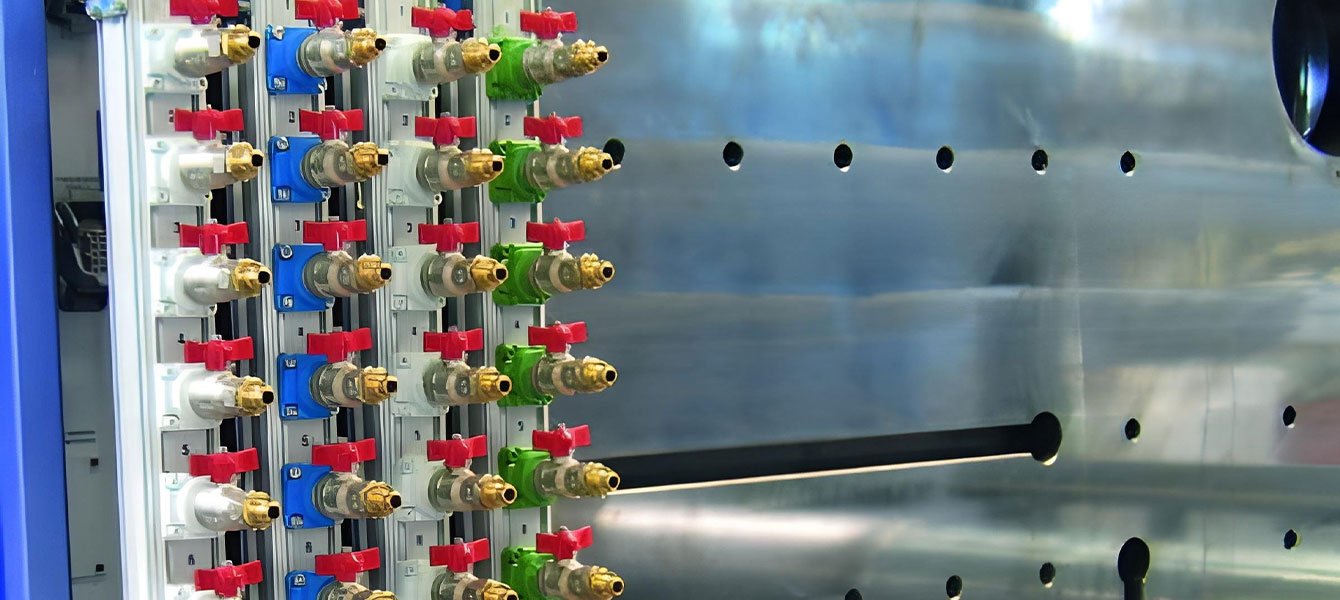
Quality connection and monitoring systems for mold coolant fluid. Achieves optimal molding conditions quickly.
- Multi-fitting systems for simultaneous connection of all fluid and electrical lines
- Clean-break, safety and free-passage couplings
- High performance and long-term reliability
Centralised measurement and remote monitoring of energy consumption across all machines.
- Accurate measurement and centralised monitoring of every energy source
- Remote measurement and viewing of energy consumption
- Control panel with graphical and numerical indicators per machine
- Any abnormal condition reported immediately for corrective action
Molding section
Multi-component molding allows two or more materials to be molded in a single cycle. Rigid engineering plastics and soft elastomers can be combined in the same part.
- Rigid materials (engineering plastics) and soft materials (elastomers) in one part
- Multiple technical and functional properties in one component
- Eliminates secondary assembly for multi-material parts
Multi-colour technology eliminates separate molding stages, manual insert loading and secondary assembly or finishing operations.
- All colours produced in a single molding cycle
- No separate molding stages
- No manual insert loading
- No secondary assembly or finishing
Parts molded with a reinforced core and a surface layer. Good aesthetic properties. High-thickness items can use regenerated material for internal layers.
- Reinforced core with quality surface layer
- Good aesthetic properties
- Regenerated material usable for internal layers
- Cost-effective for high-thickness parts
Molds with multiple molding surfaces used on the same machine. Stack molding and tandem molding increase output from a single press and reduce production costs.
- Multiple molding surfaces per machine
- Stack molding and tandem molding
- Higher output from the same machine
- Increased productivity, reduced cost per part
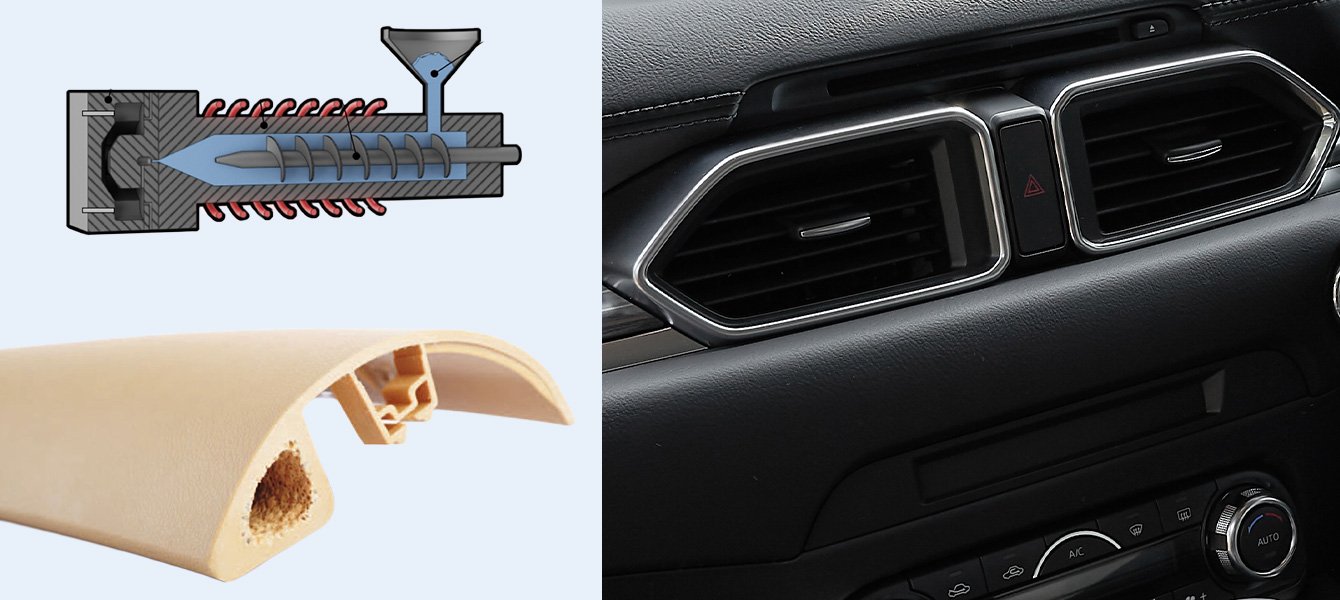
Inert gas co-injected into the plastic during molding. Hollows the part, creating strong, lightweight components. Also available with plasticising system for microcellular foam molding.
- Strong and lightweight components
- Improved surface finish — better material adhesion to mold walls
- Maximum dimensional stability
- Reduced cooling time in the mold — faster cycles
- Lighter end products — material savings
- Lower machine tonnage than conventional molding
- No post-mold fixturing needed
- 20–30% reduction in energy consumption per cycle
- Microcellular foam molding option via plasticising system
Two related processes that eliminate internal stress from the molded part.
Injection compression –
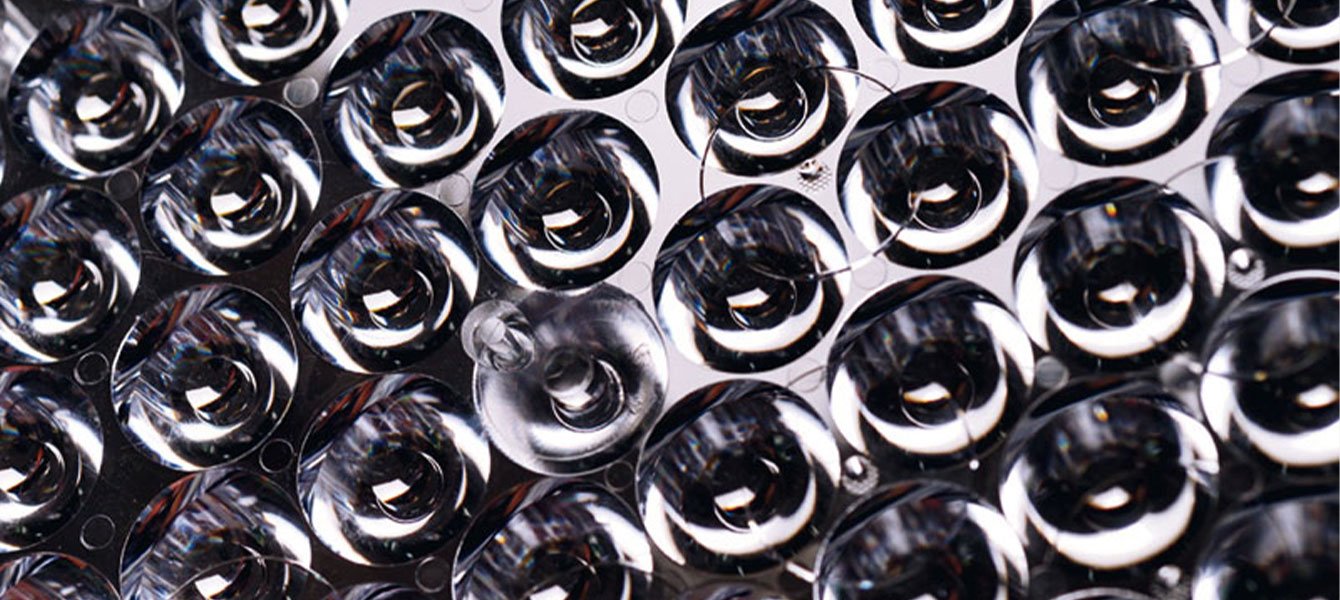
Injection and compression phases combined. No internal tensioning in the molded part. Perfect alignment of optical surfaces. For all applications where optical quality and maximum material resistance are required.
Low compression –
Lower clamping force applied during the injection and filling phase. Further reduces internal stress. Used for lenses, optical covers and precision parts requiring maximum dimensional stability.
- No internal tensioning in the molded part
- Perfect alignment of optical surfaces
- Maximum material resistance
- For optical parts, lenses and high-precision components

Integrated Automation
Molding technologies and management systems integrated into machine design and compatible with existing equipment.
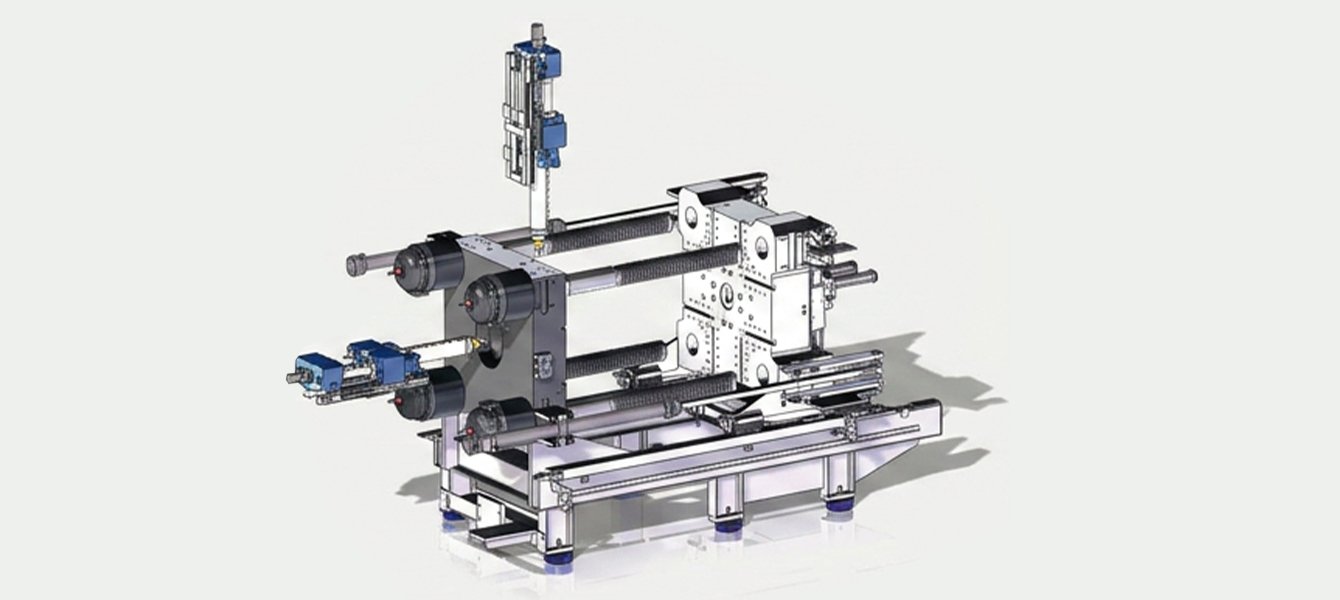
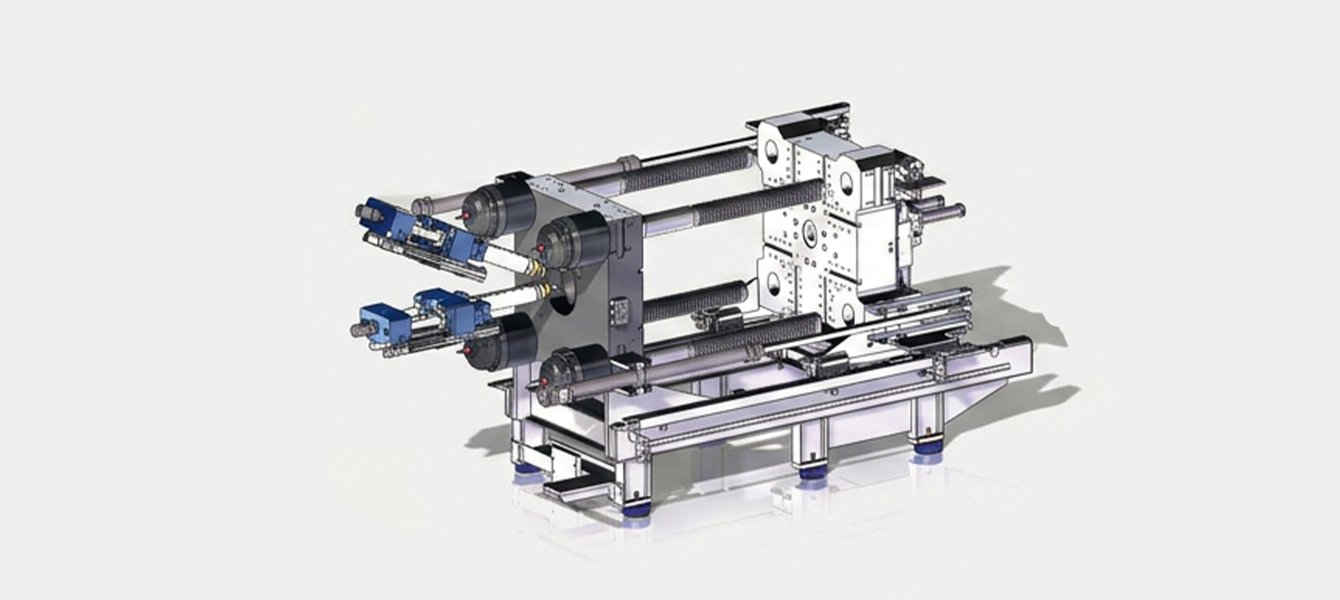
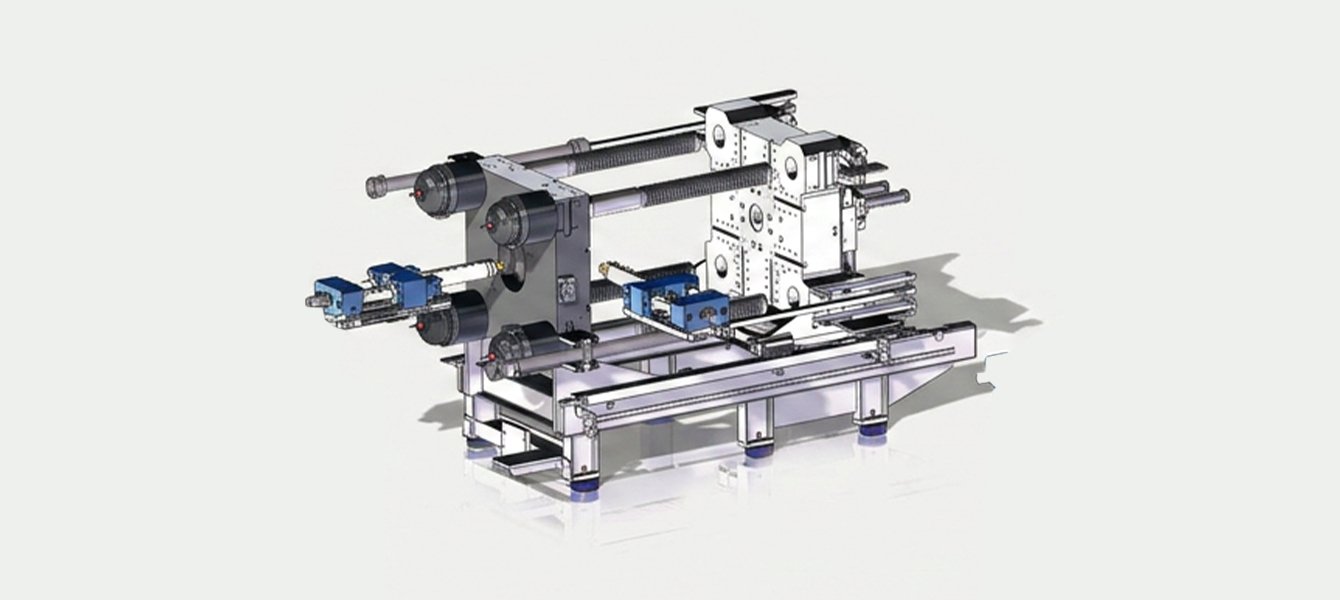
- Molding technologies built into machine architecture
- Management technologies for automation, monitoring and process control
- Compatible with new and existing machines
- Adaptable as production requirements change